How to Choose the Perfect Dinnerware Set for Your Home?
Choosing the right dinnerware set is an integral part of home decor. It can affect dining experience and set the mood for every meal. Expert designer Sarah Lawson emphasizes, “Your dinnerware reflects your style and hospitality.” When selecting a dinnerware set, consider not just aesthetics, but also functionality and durability.
The perfect dinnerware set should blend with the overall theme of your home. Are you leaning towards modern minimalism, rustic charm, or classic elegance? Think about these styles carefully. The materials chosen can impact both appearance and usability. For instance, porcelain is timeless while melamine offers practicality.
Quality is essential, but so is comfort. Some pieces may look stunning but feel awkward in hand. Be mindful of how the dinnerware feels during use. It’s worth examining various options before deciding. Mistakes can happen, leading to a mismatched style or poor quality. Reflect on these choices to find your ideal set.
Understanding Different Types of Dinnerware Materials and Their Pros and Cons
Choosing the right dinnerware set involves understanding various materials and their unique characteristics.
Porcelain is a popular choice. It’s known for its elegance and durability. Reports indicate that over 60% of consumers prefer porcelain for its chip-resistant quality. However, it can be more expensive than other options.
Stoneware is another great material. It is sturdy and often microwave-safe. According to recent surveys, about 40% of households utilize stoneware for everyday use. Yet, it can be heavier and less refined than porcelain. Some people may find it difficult to match with other dinnerware styles.
Melamine has gained traction due to its lightweight nature and affordability. Approximately 30% of dinnerware users opt for melamine, especially for outdoor settings. Though it’s shatterproof, it might not be suitable for hot foods. Many consumers overlook this vital point. In contemplating dinnerware choices, it's essential to weigh aesthetics against practicality. Making the right decision requires a balance of style, function, and safety in the kitchen.
Identifying Your Personal Style and Aesthetic Preferences for Dinnerware
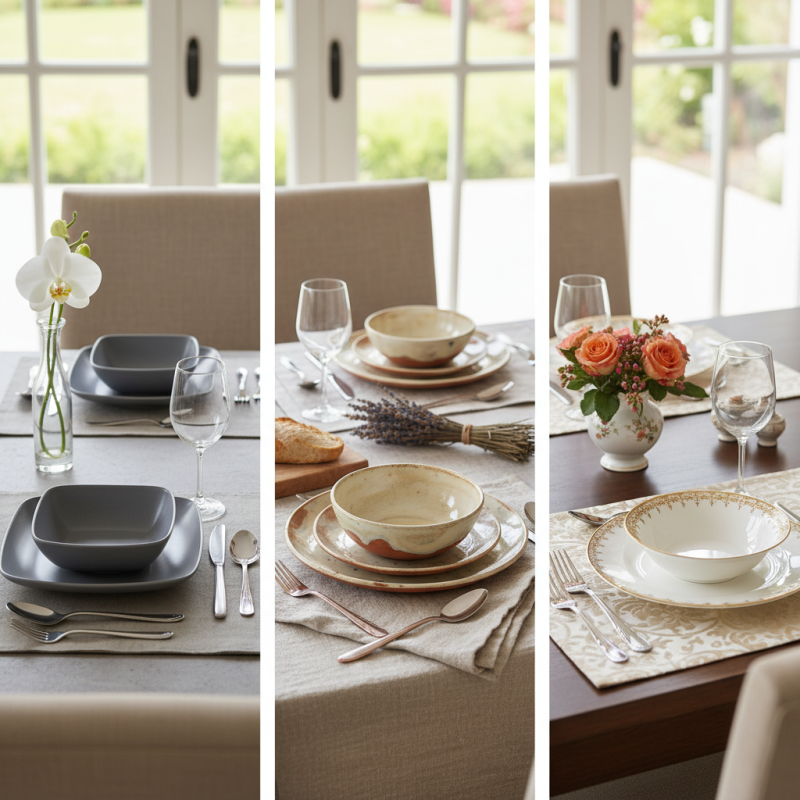
Choosing dinnerware reflects personal style. It’s more than just plates and bowls. Colors, shapes, and materials play key roles. Consider a rustic look with earthy tones. Or, opt for a sleek, modern aesthetic with clean lines. Your dinnerware should echo your personality and the vibe of your home.
Identify what resonates with you visually. Are you drawn to bold patterns or minimalist designs? Think about how these choices affect your dining experience. Mixing and matching can bring creativity but also chaos. It's worth evaluating how each piece will fit together. A cohesive set brings harmony, while mismatched items can reflect a unique charm.
Texture matters as well. Matte finishes offer a contemporary feel, while glossy surfaces feel classic. Reflect on how often you entertain and the type of atmosphere you want to create. Are you casual or formal? Dinnerware can influence the mood. Allow room for experimentation. Sometimes, what you love may not work in practice, making it crucial to reassess your selections based on usage and occasions.
Considering Practicalities: Durability, Dishwasher Safety, and Usage
When selecting the perfect dinnerware set, durability remains a crucial factor. Research shows that 35% of dinnerware users report dissatisfaction due to chipping or cracking. A robust set should withstand daily use and occasional drops. Materials like stoneware and porcelain offer excellent durability. However, these can feel heavy, which may not suit everyone's preferences. Consider lightweight options that still provide strength.
Dishwasher safety is another practical consideration. Reports indicate that nearly 60% of consumers prefer dishwasher-safe dinnerware. This saves time and effort in the kitchen. Look for labels that indicate safe use in high temperatures. However, some designed for dishwashers may still fade over time. Regular care and checking for scratches can help maintain their appearance.
Usage also plays a role in your choice. If you frequently host gatherings, larger sets may be beneficial. Yet, smaller families might find a 12-piece set sufficient. Choosing a versatile design that complements your home will help. Ultimately, your dinnerware should reflect your lifestyle. It’s important to balance aesthetics with practicality to truly find the right fit.
Budgeting for Quality: Finding the Right Dinnerware Within Your Price Range
When selecting dinnerware, budgeting is crucial. A high-quality set doesn’t always mean spending a fortune. It's essential to assess your needs. Gather information about materials, sizes, and styles that fit your lifestyle. Consider how often you host dinners or family gatherings. This can influence both your quality requirements and price range.
Many people rush into buying the first set they see. They forget to compare options. Look for reviews online or seek advice from friends. Gauging a set's durability is vital. Porcelain, for example, offers elegance but can be pricier. Stoneware, however, is often more affordable and durable. It’s wise to balance aesthetics and practicality.
Don’t shy away from second-hand shops or clearance sales. These places often hide gems of quality dinnerware. However, inspect for chips or cracks. A slight flaw might not affect functionality, but it can impact your dining experience. Always think about how a set fits your home. Color, design, and usability should reflect your personal style. Choosing dinnerware should be thoughtful, not hasty.